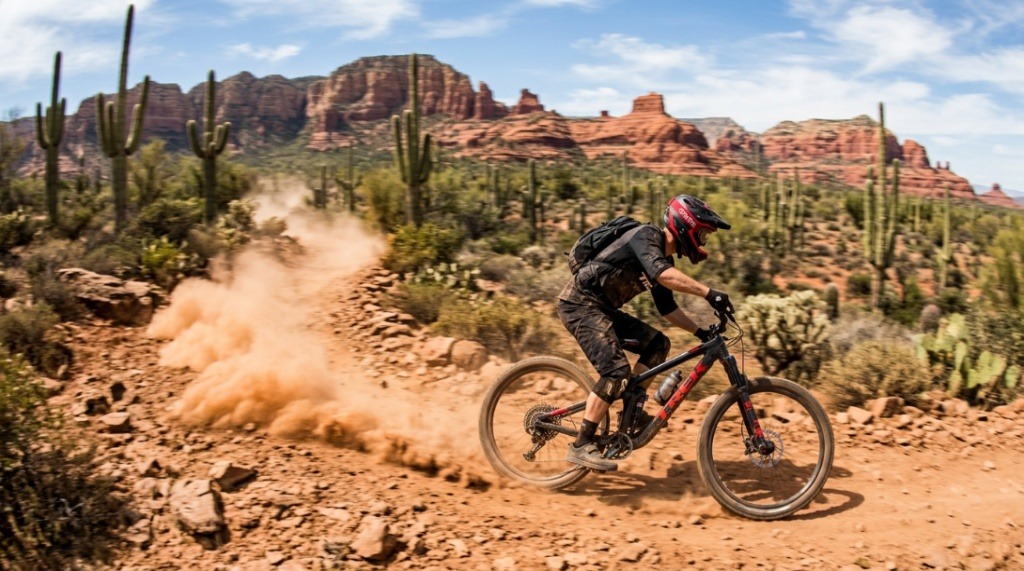
Most mountain bikers wreck their drivetrains not on the trail but at the trailhead, before they even clip in, because they grabbed the wrong lube. The best chain lubricant for desert mountain biking is a dry or ceramic wax-based formula that repels fine silica dust without turning into an abrasive grinding paste on your chain. In the desert Southwest—think Moab, Sedona, or the red-dirt single tracks of desert mountain biking in Utah—standard wet lubes are a liability. They attract the ultra-fine, talc-like dust that coats every surface within minutes of riding. That dust bonds with wet lube to form a gritty compound that grinds down your cassette, chainrings, and chain at an alarming rate. A new chain typically lasts 1,500 to 2,000 miles in normal conditions. Use the wrong lube in a sandy desert environment, and that number can collapse to under 500 miles. This guide breaks down exactly which lubricants perform in extreme heat, sand, and dry air—and why the chemistry behind your lube choice matters as much as the brand name on the bottle.
What Makes Desert Conditions So Destructive to Mountain Bike Chains?
Desert riding creates a perfect storm of abrasion, heat, and dust that accelerates chain wear faster than almost any other terrain type. Understanding this is the first step to choosing the right lube.
Standard trail environments produce coarse dirt particles large enough that they tend to fall off the chain during pedaling. Desert environments are different. The fine silica and mineral dust found in places like the red rock trails of Southern Utah or the decomposed granite of Arizona’s McDowell Mountain Regional Park behaves more like a powder. These micron-scale particles slip into the tiny gaps between chain rollers, pins, and inner plates, where they sit and grind with every pedal stroke.
Add extreme heat to the equation—desert trail surfaces can exceed 140°F (60°C) in summer—and many wet lubricants thin out rapidly. A lube that performs well in the Pacific Northwest rain becomes almost liquid in Moab in July. Combined with low humidity, which causes rapid evaporation of lighter carrier solvents, you have conditions that strip most lubes from a chain within a single ride.
Key desert-specific stressors on your drivetrain include the following:
- Ultra-fine silica dust that penetrates chain rollers
- Ambient temperatures between 90°F and 110°F on the trail
- Low relative humidity (often below 20%) accelerates solvent evaporation
- Long, exposed climbs create a sustained, high-torque chain load
- Sandy Creek crossings that instantly contaminate wet-lubed chains
What Type of Chain Lube Is Best for Desert Mountain Biking?
Dry lube—specifically ceramic-particle or PTFE-based dry lube—is the best category of chain lubricant for desert mountain biking because it dries to a thin, non-sticky film that resists dust adhesion.
Chain lubricants generally fall into four categories: wet, dry, wax, and ceramic. Each has a different base carrier and a different behavior in sand and heat.
Dry lubes use a light carrier solvent that evaporates after application, leaving behind a dry, low-tack film. This is critical in desert conditions because a dry surface does not attract and hold dust particles the way a wet or oil-based surface does.
Wax-based lubes—particularly hot-melt wax formulations—have gained massive traction among serious desert riders. They penetrate the chain’s metal-on-metal contact points and harden into a crystalline structure. Wax releases dust rather than trapping it, which is why WorldTour road cyclists racing in dusty conditions have adopted hot wax almost universally. The tradeoff is setup time and the requirement for a clean chain before application.
Ceramic-particle dry lubes embed microscopic ceramic particles into the lubricant film to reduce friction at contact points. Brands like Muc-Off, Finish Line, and Smoove use ceramic additives to extend lube life while maintaining the non-stick surface profile that desert riding demands.
Wet lubes, despite their long-lasting oil base, are genuinely counterproductive in desert conditions. They build a sticky layer that becomes a sand magnet within minutes on dry, dusty trails.
Which Chain Lubricants Perform Best in Desert Heat and Sand?
The top-performing chain lubricants for desert mountain biking are Squirt Long Lasting Dry Wax Lube, Muc-Off Hydrodynamic Lube (used as a dry-style application), Finish Line Ceramic Dry, Silca Super Secret Chain Lube, and Rex Black Diamond Wax Lube — with wax-based options dominating long-distance desert performance testing.
Top Desert Chain Lubricants Compared
| Product | Type | Best For | Reapplication Interval (Desert) | Approx. Price |
|---|---|---|---|---|
| Squirt Long-Lasting Dry Wax | Wax emulsion | All-day desert rides, sandy trails | Every 60–80 miles | $14–$18 |
| Silca Super Secret Chain Lube | Hot-melt wax (drip-on) | Maximum efficiency, long climbs | Every 100–150 miles | $30–$40 |
| Finish Line Ceramic Dry | Ceramic PTFE dry | Daily riders, easy application | Every 30–50 miles | $10–$14 |
| Muc-Off Ludicrous AF | Ceramic + graphene | Friction reduction, hot conditions | Every 40–60 miles | $30–$35 |
| Rex Black Diamond Wax | Hot-melt wax immersion | Serious desert racers, wax purists | Every 100–200 miles | $30–$40 (+ setup) |
| White Lightning Clean Ride | Wax-based dry | Budget-conscious riders | Every 40–60 miles | $8–$12 |
Is Squirt Lube Good for Desert Mountain Biking?
Yes. Squirt Long-Lasting Dry Wax is one of the most field-proven options for desert MTB riding. It uses a wax-in-water emulsion that bonds well to clean chains, dries completely within a few hours, and releases dirt without building a contamination layer. Riders on the Whole Enchilada trail system in Moab consistently rate it among their top picks for red rock conditions. The wax film does wear faster than immersion wax, so plan to reapply every 60 to 80 miles on dusty desert trails.
Is Hot Wax Immersion Worth It for Desert Riding?
For riders who put serious mileage on desert trails, hot wax immersion is absolutely worth the upfront effort. The process involves fully degreasing your chain, then submerging it in a pot of molten wax — typically a blend of paraffin with PTFE or other additives — which fills every internal void in the chain. When it cools and hardens, you have a chain that actively sheds sand rather than collecting it. Independent friction testing by Friction Facts (now part of CeramicSpeed) found that properly waxed chains are measurably more efficient than oil-lubed chains and hold that efficiency advantage longer in dirty conditions. The main commitment is setup: a clean chain, a dedicated wax pot, and a reapplication process that takes about 30 minutes but delivers 100 to 200 miles of clean, quiet running.
How Should You Apply Chain Lube Before a Desert Ride?
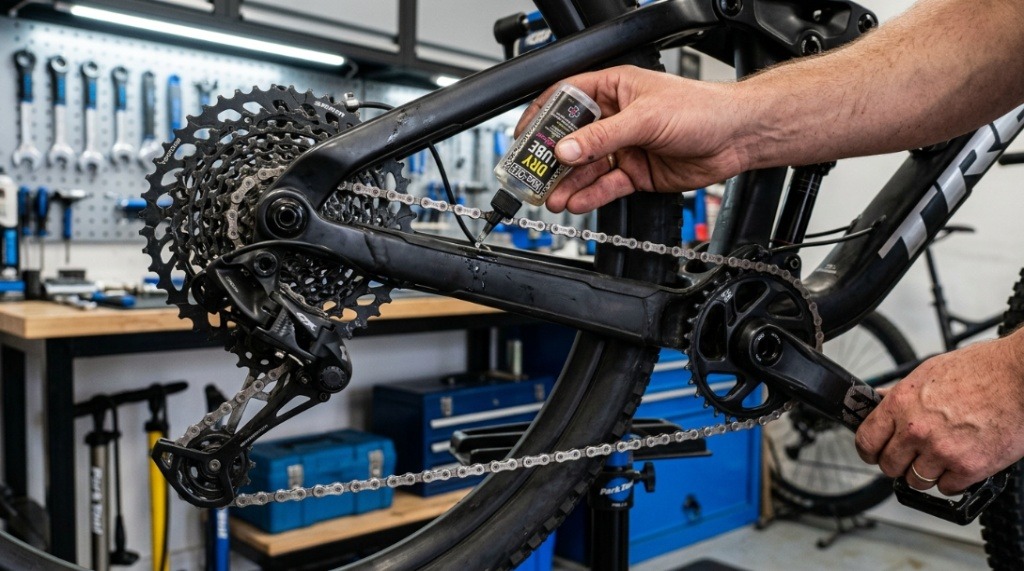
Apply lube to a clean, dry chain at least two to four hours before your ride — ideally the night before — so the carrier fully evaporates and the lubricant film properly bonds to metal contact surfaces.
Application technique matters as much as product selection in desert conditions. Follow these steps:
- Start clean. Wipe the chain thoroughly with a dry rag or use a degreaser if the chain has visible oil or old lube residue. Wax-based lubes especially require a clean base to bond correctly.
- Apply to the inner rollers, not the outer plates. Hold the applicator or dropper against the inner edge of the chain and rotate the cranks backward. You want lube inside the chain, not coating the outside where dust sticks.
- Use less than you think you need. A common mistake is over-lubing. One drop per link is more than enough for most dry lubes. Excess lube on the exterior is a dust magnet.
- Let it cure. Allow dry lubes to sit for at least 60 to 90 minutes. Wax emulsions need two to four hours. Hot wax immersion chains need to cool and set completely before riding.
- Wipe off the excess. Before heading out, use a dry rag to wipe the outer surfaces of the chain. This removes any uncured lube that could attract dust on your first miles of trail.
How Often Should You Lube Your Chain During a Multi-Day Desert Ride?
In desert conditions, reapply chain lube every 40 to 80 miles, depending on your lubricant type, trail dustiness, and whether you encounter sandy washes or creek crossings.
A useful field test: hold a white rag against the inside of the chain while pedaling backward two or three rotations. If the rag picks up black, gritty residue, the chain needs cleaning before relubricating. Applying fresh lube over contaminated lube accelerates wear. On multi-day desert bikepacking routes—like the Kokopelli Trail or the White Rim Road—carry a small chain cleaning tool, a rag, and a 30 ml bottle of your preferred dry lube. That kit weighs almost nothing and saves your drivetrain.
Does Chain Lubricant Affect Drivetrain Efficiency at High Desert Temperatures?
Yes, heat measurably thins oil-based lubricants and can reduce chain efficiency at sustained high temperatures, while wax-based formulations remain more stable across the temperature ranges typical of desert riding.
At ambient temperatures above 95°F (35°C), many petroleum-based wet lubes reach a viscosity low enough to migrate away from contact points during pedaling. This creates brief periods of metal-to-metal contact that both increase friction and deposit microscopic wear particles that become abrasive within the chain. Synthetic dry lubes with PTFE or ceramic particles have higher thermal stability — their friction-reducing particles remain in place even as carrier fluids dissipate. This is a meaningful performance factor for riders climbing sustained desert grades in summer heat.
What Happens If You Use Wet Lube in Desert Sand?
Using wet lube in desert sand rapidly turns your chain into a grinding compound—the oil bonds with fine silica to create a paste that wears cassette teeth, chainrings, and chain rollers simultaneously.
This is not a theoretical concern. Experienced desert riders have documented needing full drivetrain replacements — chain, cassette, and chainrings — after a single extended season of riding with wet lubes in sandy conditions. A replacement 12-speed cassette, chainring, and chain can easily cost $300 to $600. The best chain lubricant for desert mountain biking costs $15 to $40 and can prevent that expense entirely when used correctly.
Final Take: Protecting Your Drivetrain Starts With the Right Lube
Desert mountain biking puts unique, punishing demands on your chain and drivetrain. The fine silica dust, intense heat, and low humidity of trail environments from Moab to the Sonoran Desert are incompatible with wet, oil-based lubricants. The answer is straightforward: dry wax, ceramic dry, or hot-melt wax immersion formulations. Of these, Squirt Long Lasting Dry Wax offers the best balance of performance and ease of use for most riders, while hot-wax immersion provides the ultimate protection for those willing to invest 30 minutes before each riding block.
Equally important is application technique. A properly applied dry lube on a clean chain, with excess wiped off before the ride, will outperform an expensive lube applied carelessly to a contaminated chain. Pair the right product with consistent reapplication every 40 to 80 miles, and your drivetrain will hold up across seasons of desert riding.
Have you found a lube that works exceptionally well on your local desert trails? Drop your experience in the comments below—trail-specific knowledge from riders who know the dust is always useful to the community.
Maintaining a smooth, grit-free drivetrain is only half the battle when tackling rugged desert terrain; physical comfort plays an equally massive role in your endurance. Ensuring you have the best seat position on a bike allows you to power through deep sand and steep climbs efficiently without straining your lower back. When your saddle height and angle are dialed in correctly, you maximize your pedaling leverage, reducing physical fatigue so you can focus entirely on navigating technical, dusty singletracks.
Frequently Asked Questions: Chain Lube for Desert Mountain Biking
What is the best chain lube for dusty mountain bike trails?
The best chain lube for dusty mountain bike trails is a dry wax or ceramic-particle dry lube. Squirt Long Lasting Dry Wax, Finish Line Ceramic Dry, and Silca Super Secret Chain Lube are top choices because they leave a non-sticky film that repels rather than traps fine trail dust.
Can I use WD-40 on my mountain bike chain in the desert?
No. WD-40 is a water displacer and light solvent, not a lubricant. In desert conditions, it evaporates quickly, leaves minimal protective film, and attracts dust to any residue it leaves behind. Use a purpose-made dry or wax chain lubricant instead.
How long does chain lube last on desert trails?
In desert conditions, dry lubes typically last 30 to 60 miles, wax emulsions last 60 to 80 miles, and hot-melt wax immersion treatments last 100 to 200 miles before reapplication is needed. Heat, dust density, and trail type all affect longevity.
Should I degrease my chain before applying dry lube?
Yes, especially if switching from a wet lube or if the chain has built-up contamination. Applying dry or wax-based lube over an oily or dirty chain reduces bonding, shortens lube life, and traps abrasive particles against metal surfaces. A clean chain is the foundation of good lubrication.
Is ceramic lube better than wax lube for mountain biking?
Both perform well in desert conditions, but they serve slightly different needs. Ceramic dry lubes are easier and faster to apply and are a good choice for regular trail riders. Hot-melt wax provides longer intervals between applications and measurably lower friction, making it the preferred choice for serious riders and racers in sandy or dusty environments.
What chain lube do professional mountain bikers use in desert races?
Many professional endurance MTB racers competing on desert courses—including events held in the Southwest and similar environments—use hot-melt wax immersion lubes from brands like Silca, Rex, or Molten Speedwax. Some also use high-end ceramic dry lubes from Muc-Off or Smoove for events where wax setup is impractical in the field.
Does chain lube affect shifting performance in dusty conditions?
Yes. A contaminated or under-lubed chain in desert conditions develops uneven wear that causes hesitant, noisy shifting and missed gear changes. Maintaining proper lubrication with a dust-resistant dry lube keeps chain links moving freely and ensures consistent derailleur actuation, even after hours on dusty singletracks.