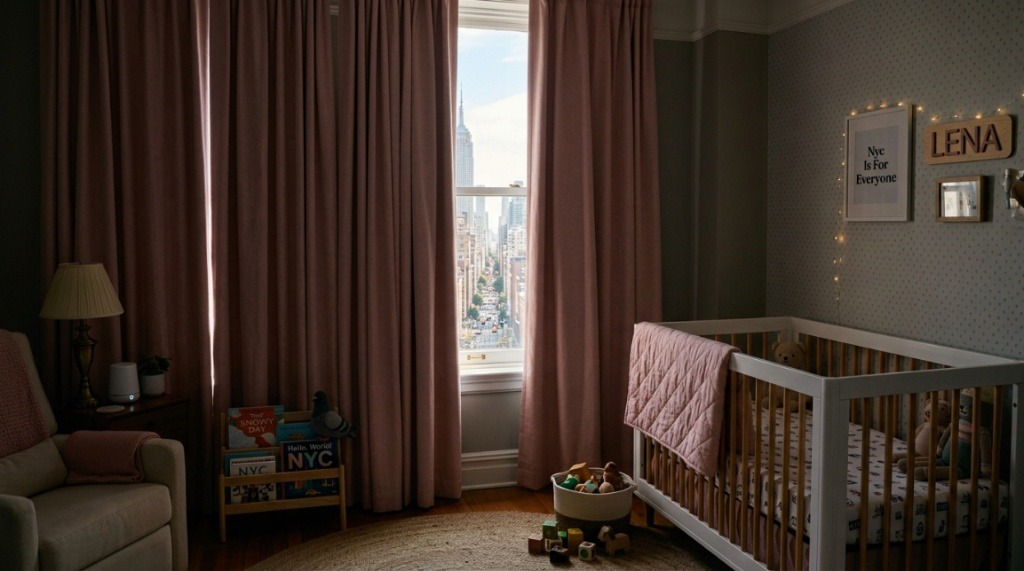
Living in New York City comes with a unique set of challenges when it comes to getting a good night’s sleep. Between the constant glow of streetlights, neon signs from nearby storefronts, and the unpredictable honking of taxis, your daughter’s bedroom can feel less like a sanctuary and more like Times Square. If she’s struggling to fall asleep, waking up too early with the sunrise, or simply needs a space that blocks out the city that never sleeps, finding the right blackout curtains for girl’s room NYC can transform her sleep quality and her room’s overall vibe. But not all “blackout” curtains are created equal. This guide will walk you through exactly what to look for, how to measure for NYC apartment quirks, and how to balance style with function for a space she’ll actually love living in.
Key Takeaways
- Not all blackout curtains block 100% of light; look for specific “total blackout” or “thermal” labels and check the fabric weight.
- Measuring for NYC apartments requires checking for radiators, window AC units, and shallow mounting depths that can affect how curtains hang.
- Layering (using a blackout liner) is often more effective in NYC than buying single-panel curtains due to varying sun angles from high-rise windows.
- Consider the room’s color scheme and the child’s age, as fabric texture and pattern play a huge role in how well the curtain blends with a functional city bedroom.
- Installation matters as much as the curtain itself; proper mounting (high and wide) prevents light leakage at the edges.
Why NYC Bedrooms Need Specialized Blackout Coverage
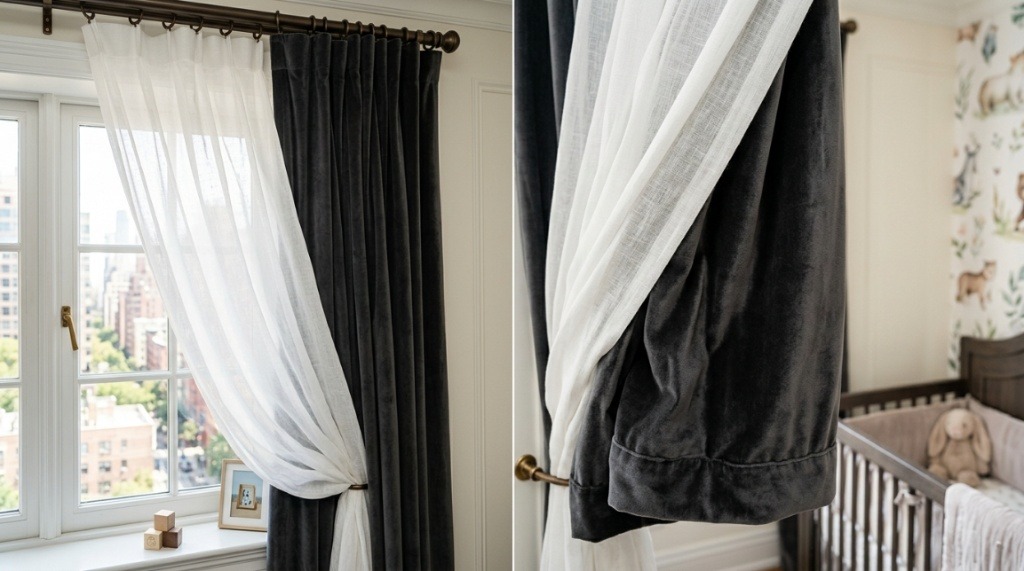
New York City has a specific light pollution problem that suburban or rural areas simply don’t have. The density of buildings means light bounces off glass facades and reflects directly into windows at odd angles. If you live in a high-rise, you might get direct morning sun that hits the window at a low angle, slipping past traditional curtains through the side gaps. Additionally, many NYC apartments have pre-war windows that are uneven or slightly off-square. This means a standard off-the-shelf curtain that works in a modern home might leave slivers of light seeping through in a classic Upper West Side pre-war unit. You need a product and installation strategy that addresses these edge leaks, not just the middle of the window.
Furthermore, NYC bedrooms often double as study spaces. If your daughter is doing homework in the late afternoon during summer, or needs to nap while the sun is still high, the curtain needs to handle different light intensities. It’s not just about nighttime darkness; it’s about controlling glare during the day without making the room feel like a cave. The best blackout options for a city apartment offer flexibility, usually through layering or specific fabric weaving that diffuses rather than just blocks.
Understanding Light Blocking Levels and Fabrics
The term “blackout” is widely misused in retail. Technically, a true blackout fabric has a coating or a tightly woven core that prevents light transmission. However, many “room darkening” curtains only filter out 80-90% of light. For a girl’s bedroom in NYC, you generally want 100% light blockage, especially if she is sensitive to light or has an irregular school schedule (like waking up early in the summer).
Fabric Weave and Density
Look for tightly woven polyester blends or heavy cotton. The tighter the weave, the less light passes through the threads. A quick test is to hold the fabric up to a bright lamp. If you can see the shape of the bulb through the material, it is not a true blackout. Polyester with a triple-weave construction is often the most effective because the black yarn is in the center of the fabric, preventing light from penetrating while keeping the exterior color fade-resistant from the sun.
The Coating Factor
Some curtains have a white acrylic foam backing applied to the fabric. This is very effective at blocking light and adds thermal insulation. However, this backing can degrade over time, especially in NYC’s humid summers, and it might start to crumble or smell. If you choose a coated option, ensure it is machine washable on a delicate cycle and dryable on a low setting, or you risk ruining the coating. For ease of care, uncoated triple-weave is often the better long-term investment for a kid’s room.
Measuring for NYC Apartment Quirks
Before you even start shopping, you must measure your window correctly. NYC apartments have quirks that suburban homes don’t, including window air conditioner sleeves, steam radiators beneath the sill, and plaster walls that make drilling difficult.
Inside Mount vs. Outside Mount
For maximum light blockage, an outside mount is almost always necessary. This means mounting the rod a few inches above the window frame and extending the rod several inches beyond the window width. This prevents light from coming around the sides. However, in NYC, you often don’t have the ceiling or wall space to do this because of crown molding or neighboring walls. If you have to do an inside mount (placing the rod inside the window recess), you must add a valance or a top treatment to block the light leaking over the top of the rod.
Handling Radiators and AC Units
If there is a radiator below the window, you need curtains that are floor-length to hide it but not pooling on it, as this is a fire hazard. you have a through-the-wall AC unit, you need to measure the depth. If the unit sticks out far, your curtains will bump into it.
Installation Tips to Prevent Light Leaks
Even the best blackout curtain will fail if the installation has gaps. In NYC, where a fire escape might be right outside the window, you also have to consider privacy. Here is how to ensure zero light gets through.
Use a Wrap-Around Rod
Standard curtain rods have finials that protrude outward, leaving gaps between the wall and the curtain. Wrap-around rods (also known as return rods) curve back toward the wall, effectively sealing the curtain against the wall on both sides. This is the single most effective way to stop light from slanting in from the sides, which is a common issue with east-facing NYC windows, While upgrading your home’s window treatments, it is also essential to take care of other high-traffic areas, such as handling regular Bathroom Maintenance to Keep your Bathroom Looking Good.
Grommet vs. Rod Pocket vs. Back Tab
- Grommet tops are easy to slide and great for kids to open and close, but they have a small gap at the top where the rod shows. This can let a seam of light in.
- Rod pockets create a tight seal at the top but are harder to slide open.
- Back tabs offer a clean look with no gaps and slide relatively easily. They are often the best choice for blackout curtains because they cover the rod completely, eliminating the top light leak.
Balancing Style with Function for a Girl’s Room
Let’s face it—the “dark cave” look isn’t what your daughter wants. She wants a room that reflects her personality, whether she’s into pastels, bold prints, or minimalist neutrals. In NYC, space is limited, so the curtains are often the main design statement of the room.
Pattern vs. Plain
Many manufacturers only make standard blackout curtains in solid, boring colors. However, the market has evolved significantly. You can now find blackout curtains in vibrant prints, floral patterns, and even galaxy-themed designs. The key is to check if the pattern is printed on the surface or woven into the fabric. Printed patterns on a polyester base are usually cheaper and still functional. Woven patterns are more durable but can be heavier and more expensive. For a teenager, a print might be a great way to add personality without needing extra wall art.
Consider the Age of the Child
This allows her to have privacy during the day with the sheer closed, while still having the option to blackout the room completely at night.
Energy Efficiency and Noise Reduction Benefits
While the primary intent is light blocking, blackout curtains offer secondary benefits that are particularly valuable in NYC. If your apartment has old, single-pane windows, these curtains act as a thermal barrier. In the winter, they trap heat inside, reducing drafts from the cold glass. In the summer, they block the sun’s radiant heat, helping keep the room cooler without overworking your AC unit. This is a significant advantage in a city where electricity costs can be high.
Additionally, the dense fabric helps dampen noise. While they won’t cancel out a fire truck siren, they do absorb high-frequency sound waves, making the “city hum” slightly less intrusive. The thickness of the fabric creates a barrier that softens the echo within the room. This is especially helpful for a light sleeper.
Cleaning and Maintenance for City Dust
NYC homes accumulate dust quickly. Blackout curtains, with their heavy fabric, are dust magnets. It is essential to check the care label before purchasing. Some blackout curtains cannot be machine washed because the backing will crack. If you want low-maintenance options, look for “wrinkle-resistant” and “machine washable” polyester weaves.
To keep them clean without frequent washing, use a vacuum cleaner with a brush attachment to suck up dust from the fabric surface monthly. For the backing, if washable, always air dry or use the “no heat” setting in the dryer to prevent the coating from melting or cracking. Regular care ensures the blackout properties remain effective for the long haul.
Cost Considerations and Where to Splurge vs. Save
In NYC, window treatments are essential, but they don’t have to break the bank. You can find decent blackout curtains at big-box stores for under $50 a panel. However, sourcing high-quality, durable options that will survive washing and daily use often requires visiting specialty stores or shopping online with specific reviews in mind. The price difference usually reflects the fabric density and the quality of the backing.
If you are on a budget, prioritize function over brand. Buy a cheaper curtain and invest in a separate thermal liner. This gives you the blackout effect without paying a premium for a designer name. On the other hand, if you have custom-sizing needs (e.g., floor-to-ceiling heights common in lofts), you may need to pay for custom, which is worth it to avoid light gaps. Always keep the meter and width in mind; standard 42″ wide panels may not be wide enough for large NYC casement windows.
Frequently Asked Questions
What is the standard width for blackout curtains for a NYC bedroom window?
Standard panels are usually 42 to 50 inches wide. However, to create a full look and ensure complete blockage when closed, your combined panel widths should be about twice the width of the window. For a typical 36-inch window, you need two 45-inch wide panels to get that full, overlapped drape.
Should I buy curtains with a thermal lining?
Yes, if your primary goal is energy efficiency. A thermal lining adds an extra layer of foam or flannel to the back of the curtain. This helps insulate against the cold glass in winter and blocks heat from the sun in summer. It also adds opacity, making the curtain even more effective at blocking light.
Can blackout curtains help my daughter fall asleep faster?
Yes. Blackout curtains remove visual stimulants that keep the brain alert. In a city like NYC, evening light pollution can disrupt circadian rhythms. By creating a pitch-dark environment, you signal to the body that it is time to produce melatonin, aiding in faster sleep onset and deeper rest throughout the night.
How do I know if the curtains are truly “total blackout”?
Check the product description for terms like “triple weave” or “physically blocks 100% of light.” Many products with the phrase “room darkening” only block 95%. Reading reviews looking for people who mention “night shift” work or “napping during the day” is a good way to gauge true performance. When they arrive, hold a flashlight up to the fabric to test for pinholes.
Are grommet curtains or rod pocket curtains better for blackout?
Rod pocket is slightly better at blocking light at the top because the fabric entirely encircles the rod. Grommet tops are easier to slide and will likely leave small slivers of light at the top where the rod is exposed. If you have a light leak issue, or the sun hits your window directly in the morning, choose a rod pocket or back tab style.
Conclusion
Choosing the perfect blackout curtains for a girl’s room in NYC is about more than just fabric patterns. It requires a strategic look at how light pollutes the city space, how your apartment’s architecture influences fit, and how the curtain functions in her daily life. By focusing on fabric density, correct mounting techniques, and solving for NYC-specific window quirks (like AC units and uneven plaster), you can create a sleep sanctuary that protects her from the city’s energy. Start by measuring twice, prioritizing a wrap-around rod, and choosing a fabric that is both washable and tightly woven. With the right setup, she’ll enjoy restful sleep and a stylish retreat that balances comfort with the reality of living in New York.