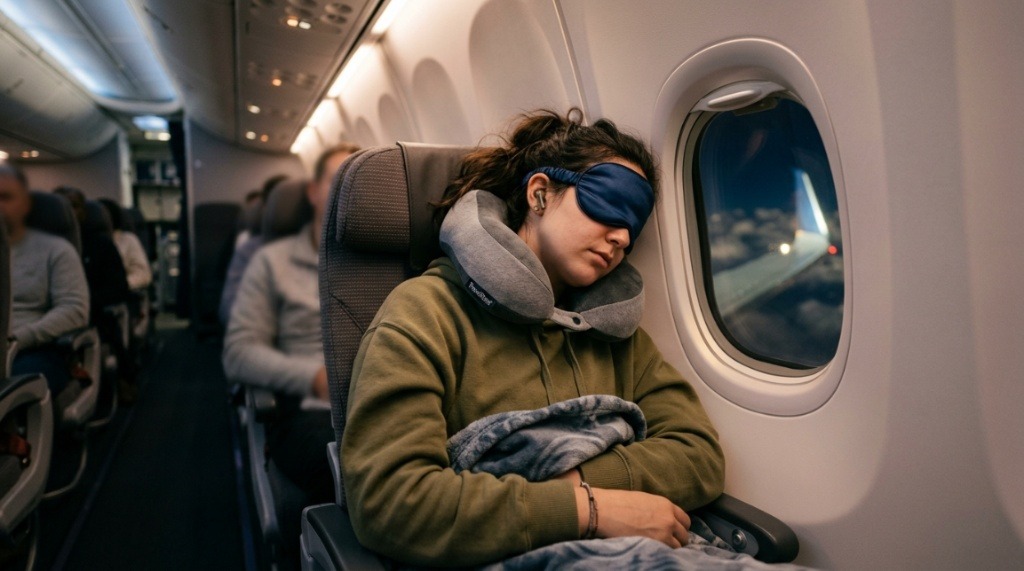
Falling asleep on a plane is rarely easy. The seat reclines a few inches, the cabin lights flicker, and your neck ends up at an angle that would impress a contortionist. You wake up hours later with a stiff neck, a dry mouth, and the unsettling feeling that you didn’t actually rest at all. The common culprit? A poorly designed neck pillow that pushes your head forward instead of supporting it properly. The good news is that you don’t need to spend a fortune on a high-tech travel gadget to fix this. With the right approach, you can sleep better on flights budget neck pillow options that actually work. This guide breaks down what to look for, how to use it correctly, and the mistakes that keep you awake even with a decent pillow in hand.
Why Most Budget Neck Pillows Fail You
The biggest issue with cheap neck pillows isn’t the price—it’s the design. Most standard U-shaped pillows are built for a one-size-fits-all scenario that fits almost no one perfectly. They push your head forward, creating a chin-to-chest position that strains your cervical spine. Within twenty minutes, your neck muscles are fighting the pillow instead of relaxing into it.
Another common flaw is material density. Many budget pillows are stuffed with loose foam beads or low-grade polyester fiber. These materials shift around easily, offering zero resistance when your head drops to the side. Instead of cradling your head, the pillow just collapses, leaving you to wake up with a kink that lasts for days.
Finally, there is the sizing problem. A pillow that is too thick for your neck length forces your head into an unnatural tilt. A pillow that is too thin provides no support at all. Without adjustable features, you are stuck with whatever angle the manufacturer decided was average.
The Difference Between Support and Softness
Many travelers confuse a soft pillow with a comfortable one. Softness feels nice when you touch it, but support is what keeps your head aligned with your spine. A good budget pillow should be firm enough to hold its shape under the weight of your head, yet pliable enough to conform to the gap between your neck and shoulder. If you can compress the pillow completely flat with one hand, it will not support you on a flight.
What to Look for in a Budget-Friendly Neck Pillow

You don’t need to spend $60 on a memory foam pillow with built-in heating elements. But you do need to pay attention to specific features that separate functional budget options from useless ones. Here are the key criteria to evaluate before you buy.
Fill Material Matters More Than the Cover
Memory foam is the gold standard for travel pillows because it responds to heat and pressure, molding to your specific shape. However, not all memory foam is created equal. Shredded memory foam offers a softer feel and allows you to remove or add filling to adjust loft. Solid memory foam provides more consistent support but can feel too firm for side sleepers.
Microbeads are another common budget option. They flow freely and feel lightweight, but they lack the structural integrity to keep your head from flopping forward. If you choose microbeads, look for a pillow with multiple chambers or baffles that prevent the beads from shifting entirely to one side.
Closure Mechanism and Adjustability
A simple snap closure is fine, but a magnetic buckle or adjustable strap gives you more control over fit. The goal is to keep the pillow snug against your neck without choking you. If the pillow has a drawstring or a toggle, you can tighten it to fill the gap between your neck and the headrest, which is where most support failures happen.
Size and Portability
Budget pillows often try to save money by using less material, resulting in a pillow that is too small to be effective. Measure the distance from your shoulder to your ear. That is the minimum thickness your pillow needs to keep your head upright. Also, consider how the pillow packs. A bulky pillow that takes up half your carry-on defeats the purpose of traveling light.
How to Position Your Neck Pillow Correctly
Most people wear their neck pillow backward without realizing it. The common instinct is to wrap the U-shape around the front of your neck, with the thicker part at the back. This works for some, but it often pushes the head forward. Try flipping the pillow so the thicker part sits under your chin. This prevents your head from dropping forward and provides a resting spot for your jaw.
Another overlooked technique involves the seat headrest. If your seat has adjustable wings, angle them inward to cup your head. Then, position the pillow between your head and the wing. The pillow fills the gap, and the wing prevents lateral movement. This combination is far more effective than relying on the pillow alone.
Use the Tray Table for a Different Angle
If you are in a window seat, you have an extra option. Fold your arms on the tray table, rest your forehead on your arms, and place the pillow between your forehead and the seatback in front of you. This position mimics a desk nap and takes all pressure off your neck. It is not glamorous, but it is highly effective for deep sleep on short to medium flights, Once you return home from your trip, maintaining that high-quality restorative rest is just as important—try upgrading to Bamboo Bedding Fixes Hot Night Sleep to keep your bedroom cool and comfortable all night long.
Common Mistakes That Ruin Your In-Flight Sleep
Even with a good pillow, certain habits will guarantee a restless flight. Being aware of these mistakes can make the difference between arriving refreshed and arriving miserable.
- Wearing the pillow too loose: A loose pillow slides around as soon as you relax, leaving your head unsupported. The strap should be snug enough that the pillow stays in place when you tilt your head.
- Reclining too far back: Reclining your seat fully actually increases the angle of your neck, making it harder to keep your head upright. A slight recline of 10 to 15 degrees is ideal.
- Ignoring lumbar support: If your lower back is unsupported, your pelvis tilts backward, which rounds your shoulders and pushes your head forward. Roll up a sweater or use the pillow’s strap to create lumbar support.
- Drinking caffeine before boarding: Caffeine blocks adenosine receptors, making it nearly impossible to reach deep sleep stages even if you feel tired.
- Using a neck pillow on a short flight: For flights under 90 minutes, the time spent setting up the pillow and getting comfortable may not be worth it. Save the pillow for longer hauls.
Budget vs. Premium: What Are You Actually Paying For?
Premium neck pillows often cost three to four times more than budget options. The price difference usually comes down to materials, brand marketing, and extra features like washable covers or compression sacks. But does the premium price translate to better sleep? Not always.
| Feature | Budget Pillow | Premium Pillow |
|---|---|---|
| Fill Material | Polyester fiber, microbeads, or low-density foam | High-density memory foam or inflatable with internal baffles |
| Adjustability | Minimal or none | Drawstrings, removable inserts, or adjustable straps |
| Durability | May flatten after 10–20 uses | Retains shape for years |
| Washability | Often spot-clean only | Removable, machine-washable covers |
| Packing Size | Bulky, takes up bag space | Compressible or inflatable to save space |
The key takeaway is that a budget pillow can work if you choose one with memory foam and a snug fit. The premium price often buys convenience features, not necessarily better sleep quality. If you are on a tight budget, prioritize fill material over brand name.
Practical Tips for Maximizing Comfort Without Spending More
You can improve your in-flight sleep experience without buying a new pillow. These small adjustments cost nothing and can have a significant impact on how well you rest.
Layer Your Clothing for Custom Support
If your pillow is too thin, wrap a scarf or a puffy jacket around it to add thickness. If it is too thick, compress it by wrapping a strap or a belt around the middle. This DIY adjustment lets you customize the loft to match your neck length.
Time Your Sleep with the Flight Schedule
If you board a flight that lands in three hours, do not try to sleep immediately if you are not tired. Wait until the meal service is done and the cabin lights dim. Your body will be more receptive to sleep, and you will avoid the frustration of lying awake for an hour before the cabin quiets down.
Use Earplugs and an Eye Mask
Light and noise are the two biggest sleep disruptors on a plane. A $2 eye mask and a pair of foam earplugs can do more for your sleep quality than a $50 pillow. The pillow supports your neck, but the mask and earplugs signal to your brain that it is time to rest.
Frequently Asked Questions
Can a budget neck pillow really help me sleep on a plane?
Yes, but only if it has sufficient density and fits your neck properly. A budget pillow made of solid memory foam with an adjustable strap can provide adequate support. Avoid ultra-soft fiber-filled pillows that collapse under the weight of your head.
Is it better to use an inflatable neck pillow or a foam one?
Inflatable pillows are more portable and allow you to adjust firmness, but they can be noisy and may deflate slowly during the flight. Foam pillows are more reliable for consistent support but take up more space in your bag. For budget-conscious travelers, foam offers better value unless space is a major concern.
How do I clean a budget neck pillow?
Check the label first. Most foam pillows cannot be machine washed. Spot clean with a damp cloth and mild detergent, then air dry completely. If the pillow has a removable cover, wash the cover in cold water and hang it to dry. Never put memory foam in a dryer.
Should I use a neck pillow in a window seat or aisle seat?
Window seats are better for sleeping because you can lean against the wall and use the pillow to fill the gap between your head and the window. Aisle seats require you to be more alert for crew and passengers passing by, making it harder to reach deep sleep.
How long does it take to get used to sleeping with a neck pillow?
Most people need one or two flights to find the right position. Experiment with the pillow facing forward and backward, and adjust the strap tightness. If it still feels uncomfortable, the pillow may be the wrong size or shape for your body.
Conclusion
Sleeping well on a flight is not about spending more money—it is about making smarter choices. A budget neck pillow can work effectively if you select one with dense memory foam, a snug fit, and the right size for your neck. Pair it with proper positioning, a window seat when possible, and basic sleep aids like earplugs and an eye mask. Avoid the common mistakes of wearing the pillow too loose or ignoring lumbar support. With these strategies, you can land at your destination feeling rested instead of stiff and groggy. Next time you book a flight, evaluate your pillow against the criteria in this guide before you board.