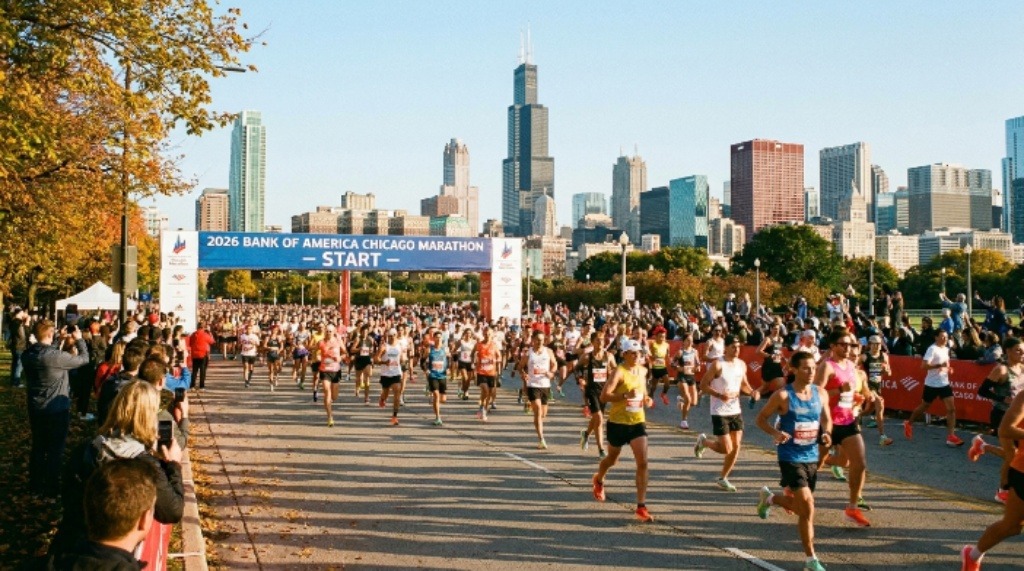
One of the most iconic races on the planet returns to the streets of Chicago this autumn. On Sunday, October 11, 2026, more than 55,000 runners from around the world will cross the start line in Grant Park. For many, this day represents months of early mornings, long training runs, and careful preparation. For spectators, it is one of the most exciting sporting events Chicago has to offer all year. Whether you are racing or cheering, this guide covers everything you need to know.
Race Day Essentials: Date, Time and Location
The 48th running of this legendary race takes place on Sunday, October 11, 2026. The start and finish are both in Grant Park, located in the heart of downtown Chicago along the Lake Michigan shoreline. Wave starts begin at 7:30 a.m. local time, so runners need to arrive well before the gun goes off.
The race earns its World Athletics Platinum Label status every year it runs. It is also one of the seven Abbott World Marathon Majors, placing it alongside Boston, New York, London, Berlin, Tokyo, and Sydney. Therefore, the standard of organization, timing, and course management is exceptional from the first corral to the final finisher.
The course time limit is six hours and 30 minutes. Participants who finish after 4 p.m. may not receive an official finisher status or full on-course support from aid stations. Keeping a pace of around 15 minutes per mile or faster throughout the race ensures full support from event staff.
The Course: 29 Neighborhoods, One Unforgettable Journey
The course is one of the flattest major marathon routes in the world. The only notable incline is a bridge crossing near the finish line over Roosevelt Road. Apart from that, runners enjoy wide, open streets with minimal elevation change across all 26.2 miles.
From Grant Park, the route heads north through the Loop, where towering skyscrapers line the early miles. It continues through River North, Old Town, Lincoln Park, and Lakeview before turning south. Runners then pass through Boystown, Wells Street, Greektown, and the West Loop. The southern section takes the course through Little Italy, Pilsen, Chinatown, Armour Square, and Bronzeville. From there, the final stretch runs up Michigan Avenue and back into Grant Park.
In total, runners pass through 29 of Chicago’s diverse neighborhoods. The course has produced seven world records over its history. The current women’s world record of 2:09:56, set by Ruth Chepngetich in October 2024, still stands as the fastest marathon ever run by a woman anywhere on earth. Kelvin Kiptum set the men’s course record at 2:00:35 in 2023.
Twenty aid stations are positioned approximately one to two miles apart along the entire route. Each station provides water, sports drinks, medical support, and access to runner transport vehicles when needed.
Entry Options: How to Get Into the Race
The 2026 lottery application closed in November 2025. However, several entry routes remain open for those who still want to participate.
The charity program is still accepting participants on a first-come, first-served basis until September 15, 2026, or until individual charity spots fill up. Each charity sets its own fundraising requirement, so it is worth contacting the official charity partners listed on the race website directly.
International runners who are not US residents can secure guaranteed entry through official tour operator packages. These bundles typically include hotel accommodation, race bibs, and logistical support throughout race weekend.
Legacy finishers, meaning anyone who has completed this race five or more times within the last ten years, receive a guaranteed spot. Additionally, runners who meet the time qualifying standards, 2:50:00 for men aged 16 to 34 and 3:20:00 for women and non-binary runners in the same age group, can guarantee their entry through the High Performance Program. Qualifying times must come from a certified full marathon completed after January 1, 2024.
Entry fees for 2026 are set at $250 for US residents and $260 for international runners. All entry fees are non-refundable.
Race Week: The Abbott Health and Fitness Expo
Before anyone runs a single step, every participant must collect their race bib in person. The Abbott Health and Fitness Expo takes place at McCormick Place, located at 2301 S. Martin Luther King Drive in Chicago.
Expo dates and times are as follows:
- Thursday, October 8: 11 a.m. to 6 p.m.
- Friday, October 9: 9 a.m. to 6 p.m.
- Saturday, October 10: 9 a.m. to 6 p.m.
Nobody else can pick up a bib on a runner’s behalf. Every participant must attend in person and bring their confirmation materials. The expo is also an excellent place to browse gear, meet sponsors, and soak in the excitement building toward race day.
October Weather: What Runners Can Expect
October in Chicago generally delivers near-ideal marathon conditions. Average temperatures on race morning sit between 45 and 65 degrees Fahrenheit, which is roughly 7 to 18 degrees Celsius. Cool air reduces overheating risk and supports faster finishing times across the board.
However, Chicago’s nickname as the Windy City is not without reason. Prevailing winds can create headwinds during the return north through miles 20 to 26. On a very windy day, this section can add several minutes to finishing times. Training for mental toughness during longer training runs is a smart strategy for managing this stretch.
Sun exposure varies along the route. The downtown Loop section benefits from shade provided by skyscrapers. The northern and southern stretches are more exposed. Applying sport sunscreen before the race is recommended regardless of how cloudy the morning looks.
Tips for Runners on Race Day
A well-executed race at Chicago begins long before the starting gun fires. These practical tips help runners avoid common mistakes and make the most of what the course offers.
- Avoid going out too fast in the early miles. The flat course makes it dangerously easy to run faster than your target pace in the excitement of the start.
- Do not react to your GPS watch in the first several miles. Downtown streets and tall buildings disrupt satellite signals, making early splits unreliable. Trust your effort level instead.
- Plan to run the tangents. Most runners cover 26.4 to 26.6 miles on their watches due to the zig-zag nature of the first few miles and wide corners. Cutting the inside of turns where safe reduces this extra distance.
- Carry salt tablets or electrolyte chews, especially if race-morning humidity is higher than expected.
- Wear comfortable race-day shoes that you have already tested on long runs. Race day is not the time to break in new footwear.
- Give extra attention to miles 20 through 24. This stretch through Bronzeville and Armour Square has lighter crowd support and can feel isolating when fatigue sets in. Breaking the final miles into shorter mental segments helps.
Guide for Spectators: Where to Watch and How to Move Around
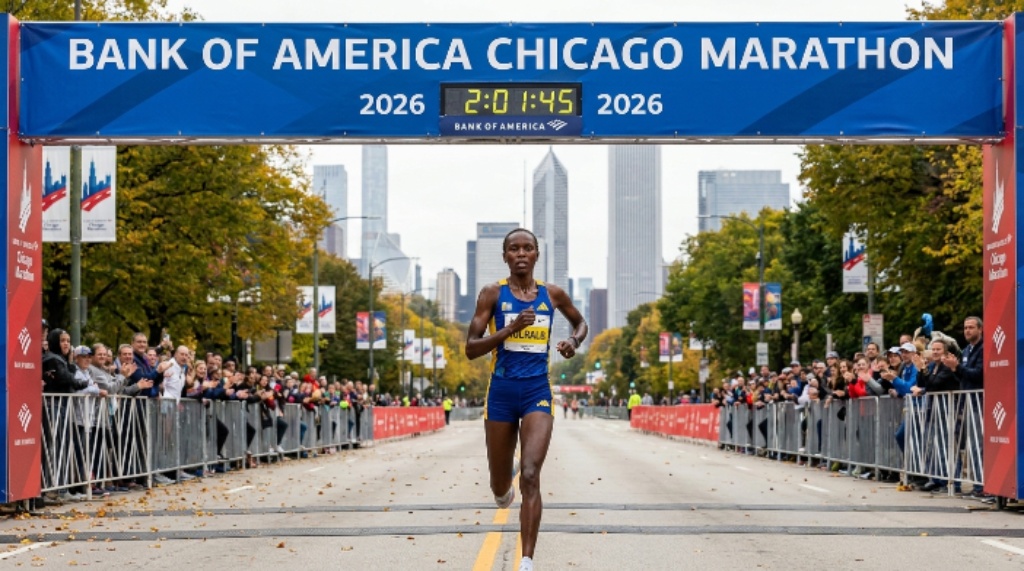
Spectators play a major role in what makes this race special. An estimated 1.7 million people line the streets every year, making the crowd support among the best in the world at any sporting event.
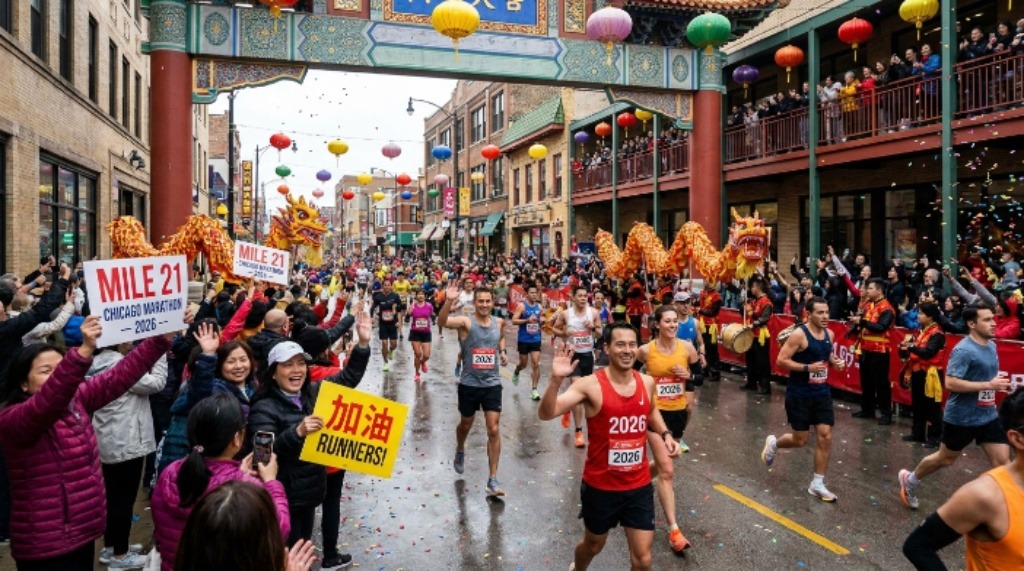
The best places to cheer are spread across the full course. The Bank of America Cheer Zone at Michigan Avenue and Roosevelt Road gives spectators a view of runners approaching the finish line. The Northalsted neighborhood around miles 7 and 9 is known for its block-party atmosphere and incredibly enthusiastic local crowds. Pilsen near mile 18 features mariachi bands and loud neighborhood energy. Chinatown around mile 21 brings colorful lion dancers and festive cheering.
Spectators should enter Grant Park from 9:30 a.m. onward to cheer from the finish area. The 27th Mile Post-Race Party also starts at 9:30 a.m. and runs until 4 p.m.
Public transport is the smartest way to move around on race day. Road closures affect large sections of the city, and parking near the course becomes extremely difficult from early morning onward. The CTA L train system connects to multiple points along the route. Taking the Orange Line to Halsted gets spectators close to mile 20. The Green Line to 35th-Bronzeville-IIT reaches mile 23, and the Red Line to Sox-35th covers mile 23 as well. Using these options makes it easy to see a runner at two or three different points on the course.
Conclusion
The 48th running of the Bank of America Chicago Marathon on October 11, 2026, is set to be one of the great sporting days of the year in the United States. The race starts and finishes in Grant Park, winds through 29 Chicago neighborhoods over a flat and fast 26.2-mile course, and draws over 55,000 runners supported by 1.7 million spectators. Entry is still available through the charity program until September 15, with additional pathways for time qualifiers, legacy finishers, and international tour operator packages. The Abbott Health and Fitness Expo at McCormick Place runs from October 8 to 10 for bib collection. October weather typically delivers ideal running conditions, though wind in the final miles deserves preparation. Spectators get the best experience by riding the CTA and targeting lively neighborhoods like Boystown, Pilsen, and Chinatown. Whether you are running for a personal best, completing your first major, or simply watching history unfold, Chicago on October 11 is the place to be.
Frequently Asked Questions
When does the 48th running of the Chicago Marathon take place?
The race takes place on Sunday, October 11, 2026. Wave starts begin at 7:30 a.m. from Grant Park in downtown Chicago. The course time limit is six hours and 30 minutes.
How can I still get an entry for the 2026 race?
The lottery is closed, but entries remain available through the official Charity Program until September 15, 2026. International runners can also secure guaranteed bibs through official tour operator packages. Runners who meet the time qualifying standards or who are legacy finishers with five or more completions in the past ten years have additional guaranteed entry options.
Where do I pick up my race bib and when?
Bib pickup takes place at the Abbott Health and Fitness Expo at McCormick Place, 2301 S. Martin Luther King Drive, Chicago. The expo is open Thursday, October 8, from 11 a.m. to 6 p.m., Friday, October 9, from 9 a.m. to 6 p.m., and Saturday, October 10, from 9 a.m. to 6 p.m. Each runner must collect their own bib in person.
What are the best spectator spots along the course?
Top spectator locations include the start and finish area in Grant Park, Northalsted around miles 7 and 9, Pilsen near mile 18, and Chinatown around mile 21. The Bank of America Cheer Zone at Michigan Avenue and Roosevelt Road is also an excellent vantage point near the finish. Using the CTA L train is the best way to move between spots on race day.
What should runners expect from the weather on October 11?
October mornings in Chicago average between 45 and 65 degrees Fahrenheit, which is ideal for marathon running. However, wind is a genuine factor in this race, particularly in the final six miles heading north. Runners should prepare for variable conditions, apply sunscreen regardless of cloud cover, and dress in layers that can be removed at the start if temperatures are cool.