Camping in Florida is a completely different beast than hiking in Colorado or backpacking in the Pacific Northwest. The combination of intense sun, high humidity, and sudden thunderstorms means your gear choices matter more than almost anywhere else in the country. If you are searching for women’s camping backpacks for florida heat, you likely already know that a standard pack designed for alpine conditions will leave you drenched within an hour. The real challenge is finding a pack that balances airflow, weight distribution, and weather resistance without sacrificing the comfort features that make a long trek bearable. This guide breaks down exactly what to look for, how to compare the technical specs that actually matter, and the trade-offs you will face when choosing your next pack for humid, hot environments.
Key Takeaways
- Ventilation is not a luxury in Florida—it is a necessity. Focus on trampoline-style back panels that keep the pack body off your spine.
- Fabric weight and breathability matter more than total pack weight alone. Lightweight packs made with non-breathable material can feel hotter than a heavier pack with mesh layers.
- A rain cover is non-negotiable in Florida, but it adds weight and traps heat. You must decide between integrated covers and pack fabrics with a waterproof coating.
- Women-specific torso sizing and hip belt geometry directly impact how a pack handles heavy loads, especially in high-heat conditions where sweating changes how straps grip.
- Hip belt padding and moisture-wicking materials prevent chafing and heat rash, which are common problems in humid environments.
Why Standard Backpack Reviews Miss the Florida Problem
Most outdoor gear reviewers focus on cold-weather performance, snow-load stability, or alpine ventilation strategies. These features do not translate well to Florida’s climate. In Florida, the temperature rarely drops enough to need heavy insulation, but the humidity makes sweat evaporation nearly impossible. A pack that performs admirably in the Rockies can become a heat trap in the Everglades.
When evaluating women’s camping backpacks for florida heat, you need to shift your priorities. The primary factors are airflow across your back, fabric breathability, and how the pack handles the inevitable afternoon downpours. You also need to consider how your body responds to heat. Women typically have a lower torso height than men, and a pack that does not fit your specific frame will cause you to overcompensate with your shoulder muscles, generating even more body heat.
The Critical Role of Back Panel Ventilation
The single biggest difference between a pack that feels suffocating and one that keeps you moving comfortably in Florida is the back panel design. Traditional packs sit directly against your spine, allowing sweat to pool between your back and the pack. In a dry climate, that sweat evaporates quickly. In Florida’s humidity, it simply accumulates, soaking your clothing and increasing your core temperature.
Trampoline Suspension Systems
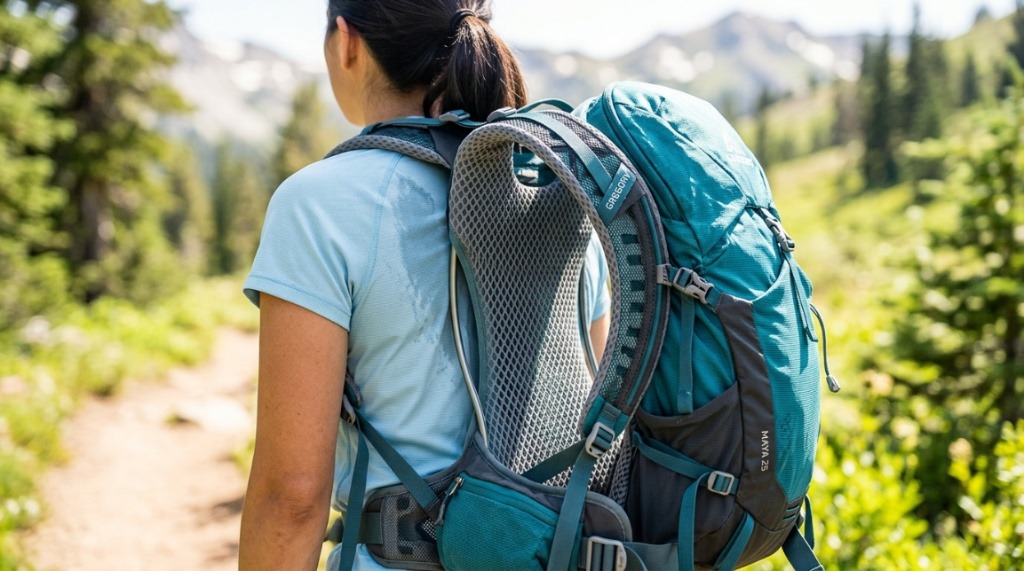
Many modern packs feature a trampoline-style suspension, where the pack body is separated from the back panel by a mesh frame. This creates a gap of air that flows across your entire back. For Florida conditions, this is the single most effective feature you can look for. The airflow keeps your back cooler and allows sweat to evaporate instead of pooling. The trade-off is weight and stability. The mesh frame adds structural weight, and the pack sits further away from your center of gravity, which can feel less balanced on technical terrain.
Mesh Padding vs. Solid Foam
If a trampoline system feels too bulky, look for packs with contoured mesh padding over foam. The key is whether the foam has channels or cutouts that allow air to move. Solid foam blocks trap heat, regardless of the mesh fabric covering them. Deep air channels are more important than the material of the mesh itself.
Fabric Weight and Breathability Trade-Offs
Pack fabric plays a surprising role in how hot you feel. Heavier denier fabrics are more durable and more water-resistant, but they also trap heat and restrict airflow. Lighter fabrics, typically in the 100 to 200 denier range, allow more air movement but require a rain cover in wet conditions.
Manufacturers often use a combination of the two—a heavier, durable fabric on the base that touches the ground and lighter, breathable fabric on the upper body. When comparing packs, pay attention not just to the total weight but to where the heavy fabric is placed. The back panel and shoulder straps should always be constructed with breathable, quick-drying materials.
How Weight Distribution Affects Heat Management
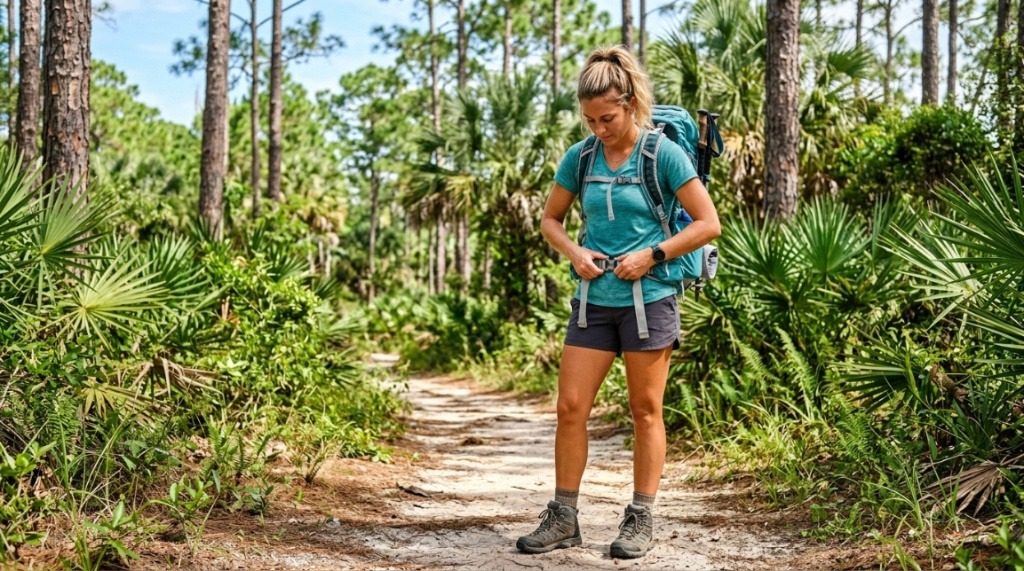
Carrying a load that is poorly distributed forces your body to work harder, which raises your core temperature. In Florida’s heat, even a small increase in exertion can make a significant difference in comfort. A well-fitted pack transfers weight to your hips, where larger muscle groups can handle the load more efficiently. This reduces shoulder fatigue and, consequently, heat generation.
Women-Specific Hip Belts
Women’s packs should have hip belts that curve to accommodate the natural shape of the female pelvis. A straight hip belt will dig into the iliac crest, creating pressure points. In heat, those pressure points become chafing zones. Look for hip belts with articulated, pre-curved shapes and dense foam that distributes weight evenly. The padding should also be covered with a moisture-wicking fabric to prevent heat rash.
Load Lifter Straps
Load lifter straps pull the top of the pack close to your shoulders and transfer weight from your shoulders to your hips. When set up correctly, they allow you to walk with less upper-body tension. This is a small adjustment that can significantly reduce the amount of heat your body produces over a long hike.
Water Resistance and Rain Protection in a Humid Climate
Florida receives an average of over 50 inches of rain per year, with most of it falling during summer afternoons. A pack that cannot handle rain will compromise your gear, but the solutions to rain protection can make you hotter.
Waterproof Fabrics vs. Rain Covers
Packs made with fully waterproof fabrics tend to be heavier and less breathable. These materials also trap heat against your back. A more practical approach for Florida is a pack made with standard breathable fabric and a separate rain cover. The cover can be deployed when the sky opens up and removed once the sun returns, allowing the pack to breathe during the majority of your hike when it is dry.
Water-Resistant Coatings
Some packs feature a water-resistant coating (often a DWR finish) that causes rain to bead up and roll off. These coatings are effective for light rain but will saturate in a proper Florida downpour. If you choose a pack with a DWR finish, understand that the coating wears off over time and requires reapplication. It is not a substitute for a rain cover.
Common Mistakes When Choosing a Pack for Hot Climates
There are several recurring mistakes people make when switching from temperate or cold-weather camping gear to a Florida-specific setup. Understanding these will help you avoid wasting money on a pack that promises much but delivers little.
Mistake 1: Choosing the smallest pack possible. A smaller pack requires you to strap gear to the exterior, which ruins the pack’s aerodynamic shape and increases wind resistance. That extra drag makes you work harder and sweat more. A slightly larger pack with a top lid keeps your load inside and closer to your center of gravity.
Mistake 2: Assuming mesh equals ventilation. Some packs have a thin layer of mesh over a solid plastic sheet. This provides zero airflow. Always check whether the mesh is suspended away from the pack frame or if it is simply a fabric covering over a solid panel.
Mistake 3: Ignoring the rain cover pocket. A pack with an integrated rain cover pocket at the base allows quick deployment without unpacking your gear. Packs that require you to dig the cover out of the main compartment will frustrate you when the rain hits, leading you to skip the cover entirely and let your gear soak, To ensure your next trip is comfortable and hassle-free, check out our guide on Top 7 Ways to Improve Your Camping Experience.
Practical Comparison Checklist for Hot-Weather Packs
When comparing packs side by side, use this checklist to evaluate each candidate quickly and objectively. These are the specific features that make the difference between a pack that manages heat well and one that leaves you miserable.
- Back panel: Does the pack have a suspended mesh trampoline panel, or is the fabric glued to the frame? If it is attached, does it have deep air channels?
- Suspension fit: Are the shoulder straps positioned to wrap around your shoulders without digging into your armpits? Women’s packs often have narrower shoulder strap spacing to fit smaller frames.
- Hip belt structure: Does the belt curve to match your body shape, and does it have sufficient padding to distribute weight without creating hot spots?
- Fabric placement: Where is the heavy fabric placed? The bottom should be durable, but the upper body and back panel should use lighter, breathable materials.
- Rain protection: Does the pack have a dedicated rain cover stash pocket? Is the cover included or sold separately?
- Water management: Does the pack have external water bottle pockets that are accessible while walking? In Florida’s heat, frequent small sips are better than stopping to dig out a hydration bladder.
When to Prioritize Weight Over Features
If you plan to hike long distances or carry significant weight, pack weight becomes critical. Every pound of pack weight is a pound you lift with every step. In Florida’s heat, the energy cost of lifting a heavy pack is amplified because your body already works harder to stay cool.
However, ultralight packs often cut corners on the very features that keep you cool: minimal padding, thin hip belts, and non-adjustable suspension systems. For Florida, the sweet spot is a pack in the 2.5 to 3.5 pound range that retains a reasonable suspension system. Packs below 2 pounds typically sacrifice the ventilation and weight distribution you need for sustained comfort in high heat.
How Your Hydration System Interacts with the Pack
Hydration bladders are popular, but they have a hidden heat consideration. A full reservoir adds weight close to the pack frame, and if the pack lacks an insulated sleeve, the water heats up quickly in the sun. Consider a pack that allows you to keep water bottles in side pockets where you can monitor water temperature and keep the bottles shaded by your body. If you prefer a hydration bladder, choose a pack with an external sleeve for the reservoir so the water stays against your back but the tube is insulated.
Frequently Asked Questions
Do I really need a trampoline back panel for Florida camping?
No, but it is the most effective feature for reducing back sweat. If you cannot find a pack with a trampoline suspension that fits well, look for one with deep air channels in the foam padding. The goal is to keep the pack body from directly contacting your spine.
What torso length is right for my height?
Torso length correlates with height but is not identical to it. Measure from the C7 vertebra (the bump at the base of your neck) to the iliac crest (top of your hip bones). Compare that measurement to the manufacturer’s sizing chart. Most women fall into a small or medium torso range, but this varies significantly by brand.
Can I use a unisex or men’s pack instead of a women’s-specific model?
You can, but women’s packs have shorter torso lengths, curved hip belts, and shoulder straps angled to accommodate a broader chest. A men’s pack will likely sit incorrectly on your hips, causing the load to shift to your shoulders and increasing fatigue and heat generation.
How important is the pack’s color in Florida heat?
Color has a minor effect. A white or light-colored pack reflects sunlight rather than absorbing it, which can keep the pack interior slightly cooler. However, the back panel ventilation and fabric breathability have a much larger impact on your comfort than the color of the fabric.
Should I buy a pack with an integrated rain cover or carry a separate one?
An integrated cover is more convenient because you cannot forget it. Separate covers are lighter and can be replaced if damaged. For Florida, make sure the cover is made with a waterproof coating and has a flap that covers the shoulder strap connections, or water will seep in through the seams.
Conclusion
Comparing women’s camping backpacks for florida heat comes down to understanding that ventilation and weight distribution are far more important than total pack weight alone. The best pack for your Florida trips will have a back panel that keeps air moving, a hip belt that distributes load to your hips, and a fabric system that dries quickly when the rain hits. Prioritize packs with suspended mesh backs, pre-curved women-specific hip belts, and a dedicated rain cover solution. Take the time to measure your torso length and try packs on with realistic weight inside them, because a pack that works on a store shelf can feel entirely different on a humid trail with 25 pounds of gear. Choose wisely, and your pack will keep you moving comfortably even in the peak of a Florida summer.