Key Takeaways
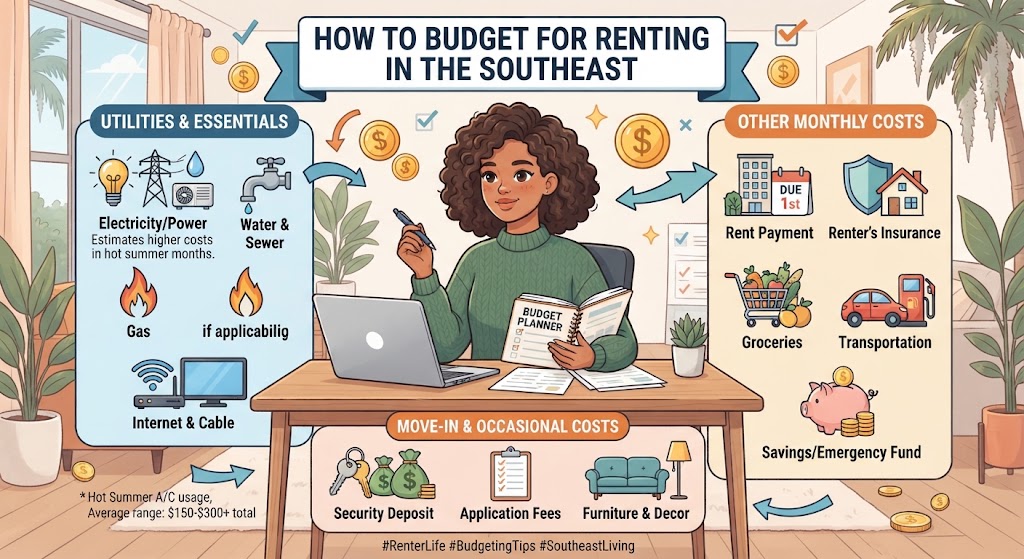
- Rent is only part of your monthly cost.
- Southeast power rates are below average, but summer cooling drives high bills.
- Ask the landlord for past utility bills before you sign.
- Plan for internet, insurance, fees, and parking as well.
- Build a buffer for hot months and unexpected charges.
A low rent can hide a high total cost. Utilities, fees, and extras add up fast. In the Southeast, hot summers make this even more true. Air conditioning can turn a fair rent into a stretched budget. Therefore, smart renters plan for the full cost of a home. This guide explains how to budget for utilities and other costs when renting in the Southeast. It covers power bills, hidden fees, and easy ways to save. Use it to avoid surprises and keep your finances steady.
Know What Utilities Really Cost in the Southeast
Start with electricity, since it is often the largest utility bill. Southeast states have some of the lower power rates in the country. The U.S. average residential rate was 18.34 cents per kilowatt-hour in June 2026, according to Energy Information Administration data. Tennessee sat at 14.07 cents, Florida at 15.10 cents, Georgia at 16.36 cents, and Alabama at 16.40 cents.
However, low rates do not always mean low bills. Southeast homes use a lot of power for cooling. ElectricChoice reports average monthly bills of about $182 in Alabama, $171 in Georgia, $165 in Florida, and $158 in Tennessee. The national average is about $166. Alabama’s high bills come from heavy usage, not high rates.
Also, prices can change. ElectricChoice shows North Carolina’s rate rose about 10 percent over the past year. Therefore, do not assume last year’s costs will hold.
Keep in mind that state averages are only a guide. One data source notes that the average bill is revenue divided by customer accounts. It says this figure is not a typical bill. A small apartment will cost less than a large house. Therefore, check real numbers for the home you want.
Follow these steps to estimate your utilities:
- Ask the landlord or property manager for 12 months of past bills.
- Note the highest summer bill and the lowest spring bill.
- Ask which utilities are included in rent.
- Call the local power company for typical costs at that address.
- Add water, sewer, trash, gas, and internet to your total.
Additionally, check the home’s features. Old windows, weak insulation, or an aging air conditioner raise costs. A newer, efficient unit may save you dozens of dollars each summer. Ask about the age of the cooling system during your tour.
Plan for Costs Beyond Rent and Utilities
Utilities are only part of the picture. Many other charges can appear before and after you move in. Therefore, list every cost before you sign.
Start with upfront costs. Most landlords require a security deposit, and some add an application fee or first and last month’s rent. Some charge pet deposits or monthly pet rent. Additionally, utility companies may ask for a deposit if you have limited credit history. Ask about all of these charges early.
Next, look at monthly extras. Many apartment communities charge for parking, trash pickup, pest control, or amenity use. Some add fees for package lockers or valet trash. These small fees can total a noticeable amount. Read the lease and the fee schedule carefully.
Internet and phone add more. Many renters pay separately for internet. Compare providers before you move, because options vary by address. Bundled plans may save money, but check the contract length and equipment fees.
Renter’s insurance is another cost worth planning. It protects your belongings and covers some liability. It is usually inexpensive, and many landlords require it. However, standard policies usually exclude flood damage. The Southeast faces hurricanes and heavy storms, so ask about separate flood coverage.
Consider these often-missed costs:
- Moving costs: Truck rental, movers, boxes, and deposits for storage.
- Furniture and basics: Cleaning supplies, curtains, and small appliances.
- Transport: Fuel, tolls, parking, and car insurance changes after a move.
- Laundry: Coin machines or laundromat visits if the unit has no washer.
- Lawn care: Some rental houses require tenants to mow and maintain the yard.
Finally, check whether the landlord bills for water. Some properties split water bills among tenants using a formula. Ask how the charge is calculated and whether it can change.
Build a Realistic Monthly Budget
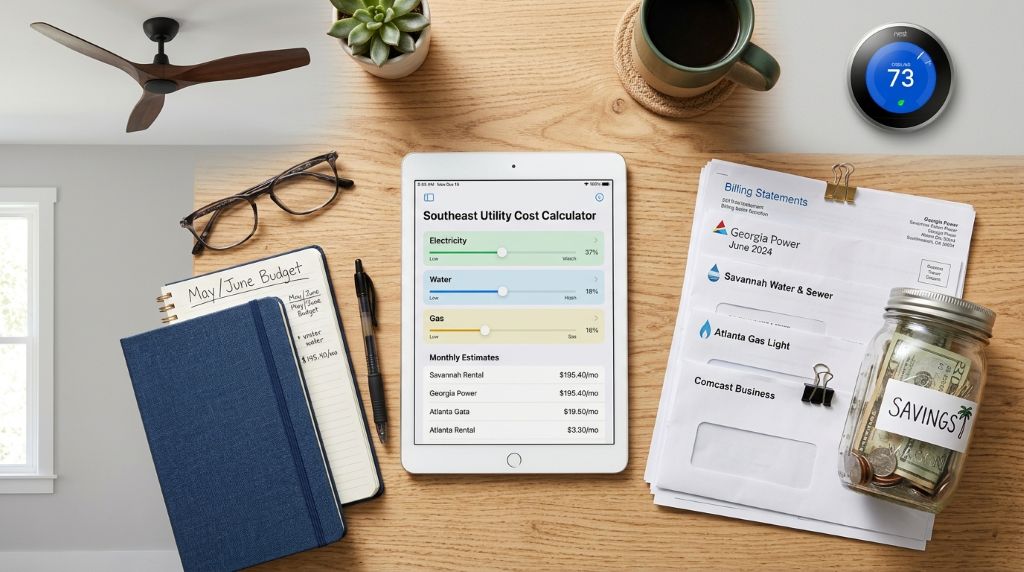
Now combine your numbers into a simple budget. A clear plan keeps you from overspending and helps you save.
Begin with your take-home pay. Then set a rent limit. Many experts suggest keeping rent near 30 percent of income. However, in the Southeast, high utility bills may push your total housing cost higher. Therefore, consider all housing costs together, not just rent.
Next, list fixed costs. These include rent, insurance, internet, and car payments. Then list variable costs, such as electricity, water, groceries, and gas. Variable costs change month to month, so use an average and add a buffer.
Plan for seasonal swings. Summer power bills can run far above winter bills. Therefore, average your yearly cost and set aside the difference in cooler months. Many utilities also offer budget billing, which spreads costs evenly across the year. Ask your provider if this option exists.
Use this simple structure:
- Take-home income: Your monthly pay after taxes.
- Rent: The base amount in your lease.
- Utilities: Power, water, gas, trash, and internet using yearly averages.
- Insurance and fees: Renter’s insurance, parking, pet rent, and other charges.
- Savings: At least a small emergency fund each month.
Additionally, keep a buffer of 5 to 10 percent for surprise charges. Storm repairs, appliance failures, and rate increases happen often. A buffer prevents these costs from becoming debt.
Track your spending for the first three months in your new home. Compare real bills with your estimates. Then adjust your budget. This habit helps you catch problems early and improves your planning for the next lease.
Finally, decide what you will do if costs run high. You might cut subscriptions, cook more at home, or adjust your thermostat. Knowing your options in advance reduces stress.
Smart Ways to Lower Your Monthly Costs
You can control many of these costs. Small habits add up over a year. Therefore, use these steps to keep bills low.
Focus on cooling first, since it drives most Southeast power bills. Set your thermostat a few degrees higher when you are away. A programmable or smart thermostat can help if your landlord allows it. Additionally, use ceiling fans to feel cooler at higher settings. Close blinds during the hottest hours to block heat.
Seal air leaks where you can. Simple weather stripping and door sweeps cost little. Ask your landlord to fix drafty windows or failing seals. Similarly, replace air filters regularly. A clean filter helps your system run efficiently.
Reduce other power use as well. Switch to LED bulbs and unplug devices you rarely use. Run laundry and dishwashers with full loads. Additionally, wash clothes in cold water when possible.
Lower your water bill too. Fix leaks quickly, and take shorter showers. Report dripping faucets or running toilets to your landlord right away.
Save on other costs with these steps:
- Compare internet plans: Ask for promotions and avoid equipment rental fees.
- Bundle insurance: Some insurers discount renter’s and car policies together.
- Negotiate fees: Ask the landlord to waive application or pet fees.
- Use utility programs: Some providers offer free energy audits or bill assistance.
- Share costs: Split utilities fairly with roommates through a written agreement.
Furthermore, consider timing. Move in during the cooler months if possible. You can learn the home’s real utility costs before summer arrives.
Finally, review your lease each year. If rent or fees rise, compare your total cost with nearby options. Sometimes a slightly higher rent with included utilities costs less overall.
Conclusion
Budgeting for a rental means looking beyond the rent number. In the Southeast, cooling costs make utilities a major part of your budget. Add fees, insurance, and moving costs, and the total can surprise you. However, you can plan ahead. Ask for past bills, list every charge, and build a buffer. Additionally, use simple habits to lower your monthly costs. The same approach can help when planning travel, especially when using a resource such as the LA28 complete visitor guide: from ticket draws to volunteer opportunities to prepare for upcoming expenses.
Take action today. Ask your next landlord for 12 months of utility bills, and build a full monthly budget before you sign. Then track your spending for three months. Share your best money-saving tip in the comments, and subscribe to our newsletter for more practical rental advice.
Frequently Asked Questions
How much are utilities for a rental in the Southeast?
It depends on the home and season. State averages for electricity range from about $158 to $182 per month, based on ElectricChoice data.
Why are Southeast electric bills high if rates are low?
Homes use a lot of power for air conditioning. High usage raises bills even when rates are below average.
What should I ask a landlord about utilities?
Ask for 12 months of past bills. Also ask which utilities are included and how water and trash are billed.
Do I need renter’s insurance in the Southeast?
Yes, it is wise. It protects your belongings. Standard policies usually exclude flood damage, so ask about separate coverage.
How much extra should I budget beyond rent?
Add a 5 to 10 percent buffer to your total monthly costs. This covers rate changes and surprise fees.