Learning to skateboard can be thrilling and challenging at the same time. One of the most fundamental aspects of skateboarding is getting your stance right. However, many beginners make critical mistakes that hold back their progress. Understanding these errors early can save you months of frustration and help you develop proper technique from the start.
Understanding Your Natural Stance
Before diving into common mistakes, you need to identify whether you’re regular or goofy footed. Regular stance means your left foot is forward, while goofy stance means your right foot leads. Neither stance is better than the other. The key is finding what feels natural to you.
Many beginners try to force themselves into a stance that doesn’t suit them. This happens because they watch their favorite skaters and try to mimic them exactly. However, your natural stance is determined by your body’s balance system and coordination patterns. Fighting against this will only make learning harder.
To find your natural stance, try having someone gently push you from behind. The foot you step forward with is typically your lead foot. Additionally, you can try sliding on a slippery floor in socks. The foot you naturally put forward is usually your skateboarding lead foot.
Placing Your Feet Too Far Apart
One of the most common mistakes beginners make involves foot placement. When nervous, new skaters often spread their feet too far apart. They think this wider stance will give them more stability. Therefore, they place their front foot near the nose and their back foot on the tail.
This mistake actually reduces your control over the board. A stance that’s too wide makes it difficult to shift your weight properly. It also limits your ability to turn smoothly and perform tricks later on. Your movements become stiff and awkward instead of fluid and natural.
The ideal stance keeps your feet roughly shoulder-width apart. Your front foot should sit just behind the front bolts. Meanwhile, your back foot should rest on or just in front of the tail. This positioning gives you optimal balance and control while maintaining mobility.
Keeping Your Feet Too Close Together
On the opposite end of the spectrum, some beginners keep their feet too close together. This mistake often comes from feeling unstable on the board. They think bringing their feet closer will help them balance better. However, this creates the opposite effect.
When your feet are too close, you lose the leverage needed to control the board. Turning becomes nearly impossible because you can’t apply proper pressure to either end. Additionally, you’ll have trouble maintaining balance when the board hits bumps or cracks in the pavement.
Your stance should allow you to bend your knees comfortably. If your feet are touching or very close together, you can’t achieve this athletic position. According to Sports Illustrated, proper athletic stance in board sports requires adequate space between your feet for weight distribution.
Pointing Your Feet in the Wrong Direction
Foot angle is another critical element that beginners often get wrong. Many new skaters point their front foot straight forward, perpendicular to the board’s direction. Others angle their back foot completely sideways. Both approaches create problems with balance and control.
Your front foot should angle slightly forward, typically between 30 and 45 degrees. This angle allows you to see where you’re going while maintaining proper weight distribution. It also makes it easier to lean into turns and adjust your balance as needed.
The back foot should sit more perpendicular to the board, usually around 90 degrees. However, it shouldn’t be completely sideways either. A slight forward angle helps with pushing and maintains better connection with the board. Finding the right angle takes experimentation, but these guidelines provide a good starting point.
Standing Too Stiff and Upright
Tension is the enemy of good skateboarding. Nevertheless, beginners often stand completely straight with locked knees. This rigid posture comes from fear and uncertainty. When you’re nervous, your body naturally tenses up. Unfortunately, this stiffness makes falling more likely.
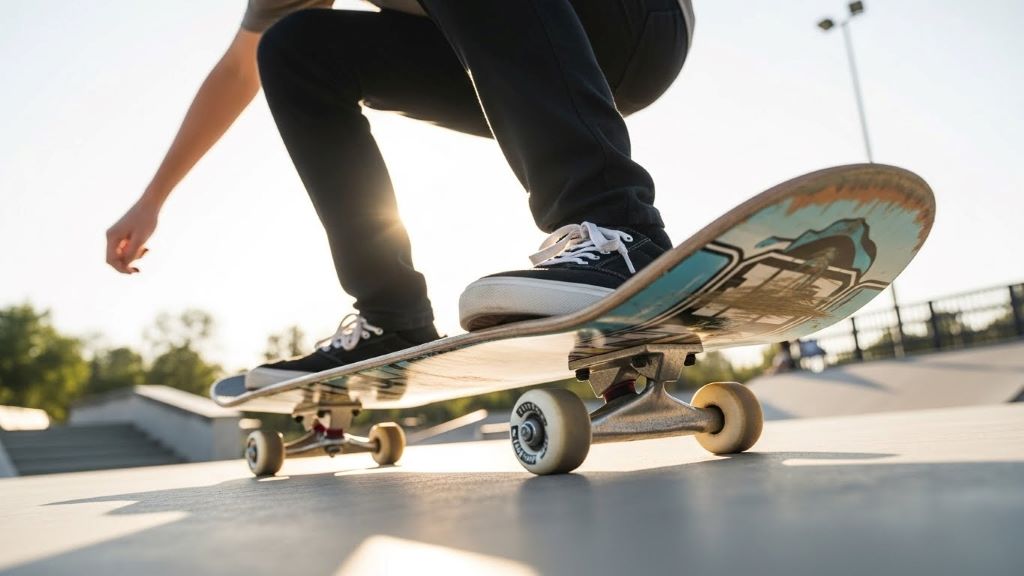
A proper skateboard stance requires bent knees and a lowered center of gravity. Think of it like sitting in an invisible chair. Your weight should be centered over the board, not leaning too far forward or backward. This athletic position gives you the flexibility to react to changes in terrain.
Keeping your knees bent also acts as natural suspension. When you hit a crack or pebble, bent knees can absorb the impact. Locked knees transfer that shock directly to your body, making you more likely to lose balance. Practice riding with bent knees until it becomes second nature.
Looking Down at Your Feet
Another mistake that plagues beginners is constantly looking down at their feet. While it seems logical to watch your foot placement, this habit creates serious problems. Looking down shifts your weight forward and disrupts your balance. Moreover, you can’t see where you’re going, which increases the risk of accidents.
Your body naturally follows your eyes. When you look down, your shoulders hunch forward and your weight shifts incorrectly. This makes the board harder to control and can cause you to fall forward. Additionally, you won’t see obstacles, pedestrians, or other hazards in your path.
Instead, look where you want to go. Your peripheral vision and muscle memory will handle foot placement. This approach might feel uncomfortable at first. However, it’s essential for developing proper balance and spatial awareness. ESPN’s action sports coverage emphasizes that looking ahead is crucial for safety and progression in skateboarding.
Leaning Back Too Much
Fear often causes beginners to lean backward on their board. This defensive posture feels safer because falling backward seems less scary than falling forward. Therefore, new skaters unconsciously shift their weight toward the tail. This mistake severely limits control and increases the likelihood of the board shooting out from under you.
When you lean back, the nose of the board lifts slightly. This reduces the contact between your front wheels and the ground. Consequently, the board becomes unstable and harder to steer. The back wheels also wear unevenly when bearing too much weight.
Proper weight distribution keeps your center of gravity over the middle of the board. Your weight should be evenly split between both feet. This balanced position allows the board to roll smoothly and respond predictably to your movements.
Neglecting to Adjust Your Stance
As beginners gain confidence, they sometimes forget to adjust their stance for different situations. The stance you use for cruising shouldn’t be identical to your stance for learning tricks. However, many new skaters lock into one position and never vary it.
For comfortable cruising, you might angle your front foot more forward. This opens up your hips and makes long rides more comfortable. When preparing to learn tricks, you’ll need a more squared-up stance with both feet closer to perpendicular. Being rigid about your stance limits your development as a skater.
Experiment with slight variations in foot placement and angle. Pay attention to how small changes affect your control and comfort. Over time, you’ll naturally adjust your stance based on what you’re trying to accomplish. This adaptability is a mark of progressing beyond beginner level.
Conclusion
Proper stance forms the foundation of all skateboarding skills. The mistakes beginners make with foot placement, weight distribution, body position, and visual focus can significantly slow their progress. By identifying your natural stance, maintaining appropriate foot spacing, keeping your knees bent, and looking where you’re going, you’ll develop better balance and control.
Remember that everyone makes these mistakes when starting out. The key is recognizing them early and making conscious corrections. Therefore, take time during each session to check your stance. With practice and awareness, proper positioning will become automatic, allowing you to focus on advancing your skills and enjoying the ride.
Frequently Asked Questions
How long does it take to feel comfortable with proper skateboard stance?
Most beginners need two to four weeks of regular practice to feel comfortable with correct stance. However, this timeline varies based on how often you practice and your natural coordination. Daily practice accelerates the learning process significantly.
Can I switch from goofy to regular stance or vice versa?
While possible, switching your natural stance is extremely difficult and generally unnecessary. Some professional skaters can ride both ways, but this takes years of practice. Focus on mastering your natural stance first before experimenting with riding switch.
Should my stance be different for street skating versus park skating?
Your basic stance remains the same, but you might make minor adjustments. Street skating often requires a more mobile stance for navigating obstacles, while park skating might use a slightly wider stance for stability on ramps. These variations develop naturally with experience.
Why do my feet keep sliding around on the board?
Sliding feet usually indicate improper weight distribution or worn-out shoes. Make sure you’re wearing skate shoes with good grip. Additionally, check that you’re bending your knees and keeping your weight centered over the board rather than leaning too far in any direction.
Is it normal for proper stance to feel awkward at first?
Absolutely. Proper stance often feels unnatural to beginners because it requires using muscles in new ways. Your body needs time to adapt to the athletic position and balance requirements. The awkward feeling typically disappears within a few weeks of consistent practice.
Related Topics:
Is It Easy to Learn How to Ride a Skateboard: Uncover the Secrets to Mastering Skateboarding Effortlessly